Why in NEWS
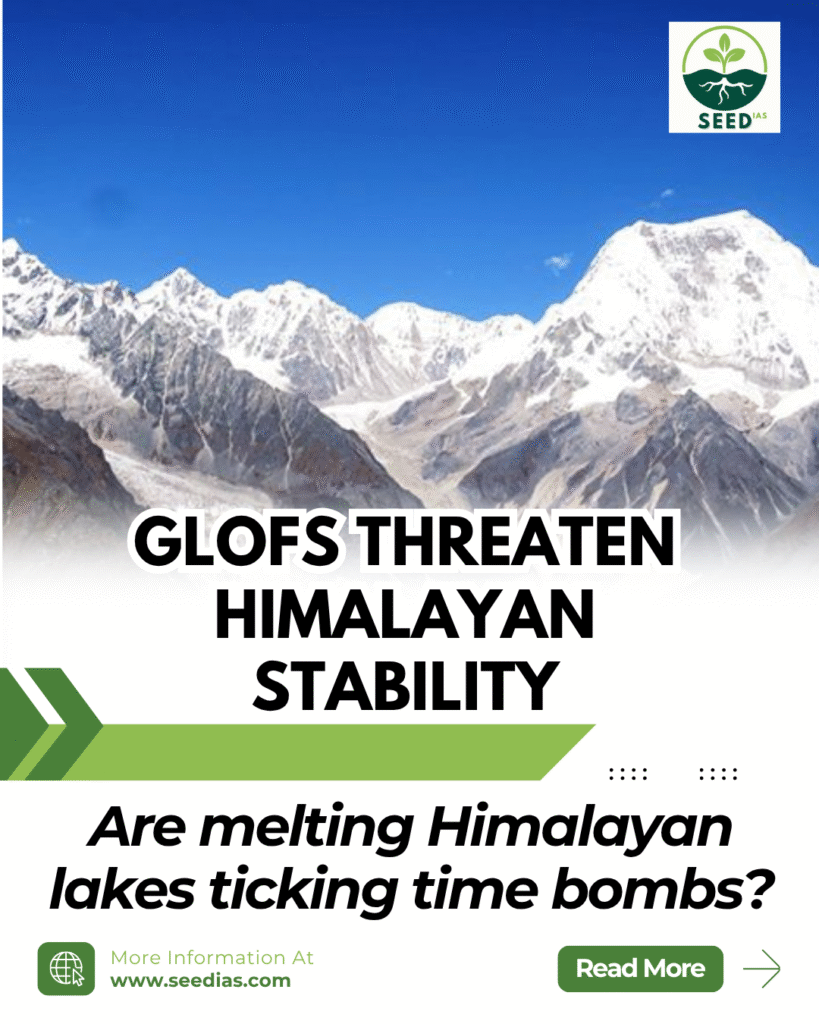
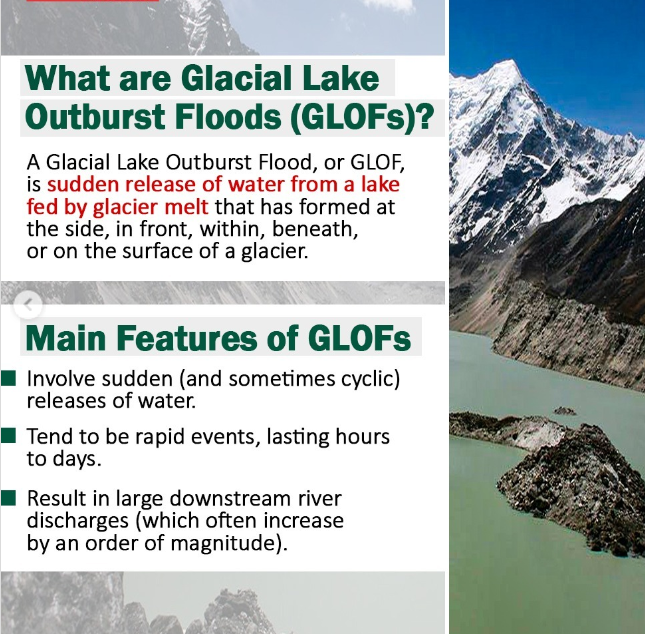
Frequent Glacial Lake Outburst Floods (GLOFs) in Nepal have raised alarm in India’s Himalayan states, where over 7,500 glacial lakes—many unstable—pose a growing threat from climate change-driven disasters.
Key Terms and Concepts
| Term | Explanation |
|---|---|
| GLOF | Sudden release of water from glacial lakes due to dam failure (ice/moraine), often catastrophic |
| Moraine | Accumulated rock and debris left by a glacier, often forms weak natural dams |
| Supraglacial Lake | Water body formed on glacier surface due to melting |
| SAR Interferometry | Satellite-based radar tech to detect terrain changes and slope shifts |
| AWWS | Automated Weather and Water Stations for real-time lake and weather monitoring |
What Causes GLOFs?
| Cause | Example |
|---|---|
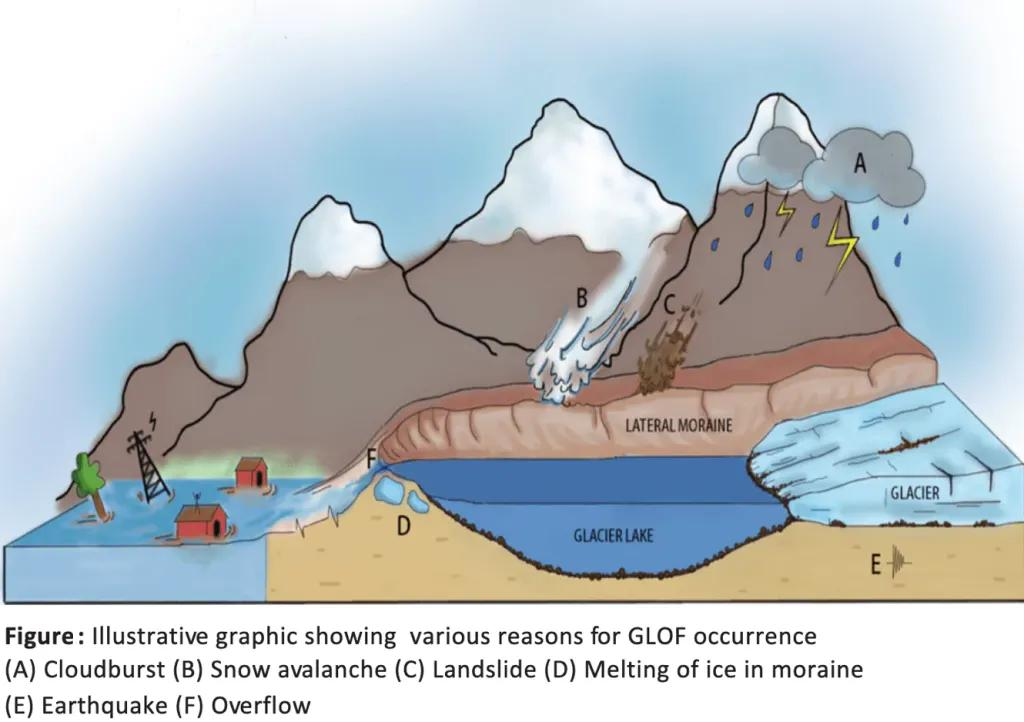
| Climate Change | Melting glaciers form new, unstable lakes (e.g. 2013 Kedarnath tragedy) |
| Cloudbursts | Intense rainfall stresses moraine dams (e.g. 2023 North Sikkim GLOF) |
| Avalanches/Landslides | Trigger displacement waves breaching lake dams (e.g. 2021 Chamoli) |
| Earthquakes | Nepal 2015 quake altered lake stability |
| Weak Moraines | Piping erosion weakens moraine dams (e.g. 1985 Dig Tsho GLOF, Nepal) |
| Infrastructure Stress | Roads, dams worsen ecological fragility (e.g. Teesta-III Dam collapse in 2023) |
Types of Himalayan Glacial Lakes
| Type | Characteristics |
|---|---|
| Supraglacial | Formed on glacier surfaces; vulnerable to melt and collapse |
| Moraine-Dammed | Formed at glacier snouts, held by weak debris; most prone to GLOFs |
India’s Vulnerability to GLOFs
| Aspect | Details |
|---|---|
| Geographic Exposure | 28,000+ glacial lakes in IHR; 7,500 in India, mostly >4500m elevation |
| Monitoring Challenges | Remote terrain restricts surveys; heavy reliance on satellite data |
| Risk Evidence | ISRO (1984–2023) reports 601 lakes have doubled in size since 2016 |
| Past Disasters | 2013 Kedarnath, 2021 Chamoli, 2023 Sikkim GLOFs caused deaths and infrastructure collapse |
| Lack of Early Warning | Inadequate on-ground systems; delayed detection increases disaster impact |
Recent Measures by India
| Initiative | Description |
|---|---|
| NDMA’s GLOF Mitigation Plan | $20 million plan for 195 high-risk lakes; focuses on pre-disaster readiness |
| Technological Tools | UAVs, ERT, bathymetry, SAR to map risk; AWWS in Sikkim for real-time alerts |
| Local & Security Forces | ITBP trained for manual alerts in remote zones; locals involved in awareness drives |
| NDMA’s 5-Fold Strategy | Includes hazard assessment, AWWS, EWS, mitigation (drawdowns), community outreach |
Way Forward
| Recommendation | Action Steps |
|---|---|
| Advance Monitoring | Expand AWWS, SAR, automated alerts, community-based warning systems |
| Strengthen Infrastructure | Enforce safety norms in dam design, promote GLOF-resilient hydropower |
| Leverage Indigenous Innovation | Fund local R&D for glacial safety; use spillways for lake drainage |
| Boost Governance | Mandate GLOF risk assessments, enable panchayat participation, hold joint drills with Nepal/China |
In a Nutshell
Code: “MELT-R”
Moraine-dammed lakes growing
Earthquakes, avalanches trigger collapse
Lack of early warnings
Teesta, Kedarnath show human cost
Resilient systems needed now!
Prelims Practice Questions
- Which of the following factors contribute to GLOF events?
A. Cloudbursts
B. Moraine dam failure
C. Seismic activity
D. All of the above - The South Lhonak GLOF (2023) led to the collapse of which major infrastructure project?
A. Bhakra Nangal Dam
B. Teesta-III Hydropower Project
C. Nathpa Jhakri Plant
D. Sardar Sarovar Dam - What is the role of AWWS in the context of GLOF mitigation?
A. Construction of dams
B. Glacier excavation
C. Real-time lake and weather data monitoring
D. Military communication
Mains Practice Questions
- Discuss the rising threat of Glacial Lake Outburst Floods (GLOFs) in the Indian Himalayan Region and examine the adequacy of India’s preparedness. 10 Marks (GS3 – Disaster Management)
- “GLOF management requires a synergy of science, policy, and community action.” Examine with examples from recent events. 10 Marks
Answers and Explanations (Prelims)
| Qn | Answer | Explanation |
|---|---|---|
| 1 | D | All listed factors can trigger a GLOF |
| 2 | B | Teesta-III hydropower project was destroyed in the 2023 Sikkim GLOF |
| 3 | C | AWWS provide real-time lake and weather data to detect potential GLOFs early |