Why in News?
Recently, Kerala has reported a surge in Shigellosis (Bacillary Dysentery) cases across multiple districts, prompting health authorities to issue advisories on:
- Personal hygiene
- Safe drinking water
- Food safety
- Isolation of infected individuals
The outbreak has raised concerns regarding waterborne diseases and the growing threat of antimicrobial resistance.
About Shigellosis
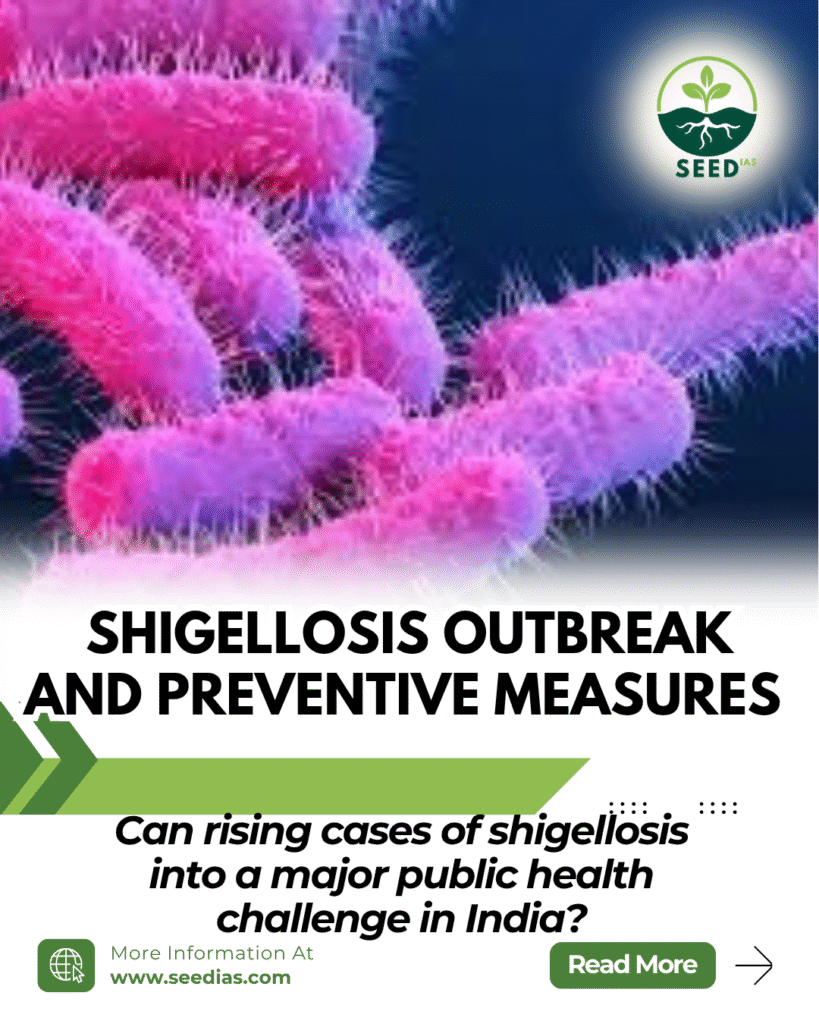
Shigellosis, also known as Bacillary Dysentery, is a highly infectious bacterial disease that affects the intestines and causes severe diarrhoea.
Symptoms
- Fever
- Abdominal cramps
- Nausea and vomiting
- Frequent loose stools
- Bloody or mucus-containing stools
- Dehydration (in severe cases)
Causative Organism
Shigella
- A Gram-negative bacterium
- First isolated in 1897
- Discovered by Kiyoshi Shiga during a dysentery epidemic in Japan
Important Fact
Only 10–100 bacteria are sufficient to cause infection, making Shigellosis one of the most contagious bacterial diseases.
Transmission
The disease spreads primarily through the faeco-oral route.
Modes of Spread
- Contaminated drinking water
- Contaminated food
- Poor hand hygiene
- Infected surfaces and objects
- Direct person-to-person contact
High-Risk Settings
- Schools
- Childcare centres
- Hostels
- Households
- Crowded settlements
Who is Most Vulnerable?
High-Risk Groups
- Children below 5 years
- Elderly persons
- Immunocompromised individuals
- Malnourished populations
Concern
Children under five face the highest risk of:
- Severe illness
- Dehydration
- Mortality
No individual is completely immune to infection.
Why is Shigellosis a Public Health Concern?
Extremely Infectious
A very small infectious dose can trigger outbreaks.
Rapid Community Transmission
The disease spreads quickly in:
- Families
- Schools
- Institutions
- Communities
Antimicrobial Resistance
The emergence of Multi-Drug Resistant (MDR) Shigella strains is becoming a serious challenge in India.
Consequences
- Reduced effectiveness of antibiotics
- Longer illness duration
- Higher treatment costs
- Increased outbreak potential
Prevention Measures
Safe Drinking Water
- Boil drinking water before use.
- Consume treated and filtered water.
Food Safety
Avoid:
- Stale food
- Raw or undercooked food
- Food from unhygienic sources
Prefer:
- Freshly cooked food
- Properly stored meals
Hand Hygiene
Wash hands with soap for at least 20 seconds:
- Before eating
- Before cooking
- After using toilets
- After caring for patients
Personal Hygiene
- Maintain clean surroundings.
- Regularly disinfect frequently touched surfaces.
Isolation of Infected Individuals
- Infected children should remain at home.
- Avoid attending schools or public gatherings.
- Avoid food handling activities.
Health Advisory
Individuals should avoid public gatherings and food preparation for others for at least two weeks after symptoms subside.
Treatment
Mild Cases
Managed through:
- Oral Rehydration Solution (ORS)
- Adequate hydration
- Rest
Severe Cases
Require:
- Medical supervision
- Intravenous fluids
- Antibiotic therapy (where indicated)
Challenges in Managing Shigellosis
Multi-Drug Resistance
Increasing resistance to commonly used antibiotics complicates treatment.
Water and Sanitation Gaps
Unsafe water and poor sanitation continue to drive outbreaks.
Delayed Diagnosis
Symptoms may resemble other diarrhoeal diseases, leading to delayed intervention.
Surveillance Limitations
Early detection and outbreak tracking remain challenging in many regions.
Measures Needed
Strengthen Disease Surveillance
- Early detection of outbreaks
- Real-time reporting systems
Ensure Safe Water Supply
- Regular water quality testing
- Improved sanitation infrastructure
Promote Rational Antibiotic Use
- Avoid self-medication
- Encourage laboratory-guided treatment
Food Safety Monitoring
- Regular inspections of food establishments
- Enforcement of hygiene standards
Community Awareness
- Hygiene education campaigns
- School-based health awareness programs
Significance for India
The Kerala outbreak highlights the critical link between:
- Public health
- Safe drinking water
- Sanitation
- Food safety
- Antimicrobial resistance
Effective prevention and surveillance are essential to avoid larger outbreaks and reduce disease burden.
Prelims Focus
Key Facts
- Shigellosis is also called Bacillary Dysentery.
- Caused by Shigella, a Gram-negative bacterium.
- Discovered by Kiyoshi Shiga in 1897.
- Transmitted through the faeco-oral route.
- Infectious dose: 10–100 bacteria.
- Children under five are most vulnerable.
- Multi-drug resistant Shigella is an emerging public health threat.
UPSC Prelims Practice Questions
Q1. Consider the following statements regarding Shigellosis:
- It is caused by a Gram-negative bacterium.
- It primarily spreads through the faeco-oral route.
- Only a small number of bacteria are sufficient to cause infection.
Which of the statements given above are correct?
(a) 1 only
(b) 1 and 2 only
(c) 2 and 3 only
(d) 1, 2 and 3
Q2. With reference to Shigella, consider the following statements:
- It was first isolated by Kiyoshi Shiga.
- It was discovered during a dysentery epidemic in Japan.
- It is a viral pathogen.
Which of the statements given above are correct?
(a) 1 and 2 only
(b) 2 and 3 only
(c) 1 and 3 only
(d) 1, 2 and 3
Q3. Which of the following are effective measures for preventing Shigellosis?
- Boiling drinking water
- Washing hands with soap
- Avoiding stale food
- Maintaining personal hygiene
Select the correct answer using the code below:
(a) 1 and 2 only
(b) 1, 2 and 3 only
(c) 2, 3 and 4 only
(d) 1, 2, 3 and 4
Answers
Q1. (d) 1, 2 and 3
Q2. (a) 1 and 2 only
Q3. (d) 1, 2, 3 and 4
Mains Value Addition
“Shigellosis demonstrates how public health outcomes are determined not only by medical care but also by access to clean water, sanitation, hygiene, and responsible antibiotic stewardship.”